


Top Forex Trading Indicators for Successful Trading 1865351219
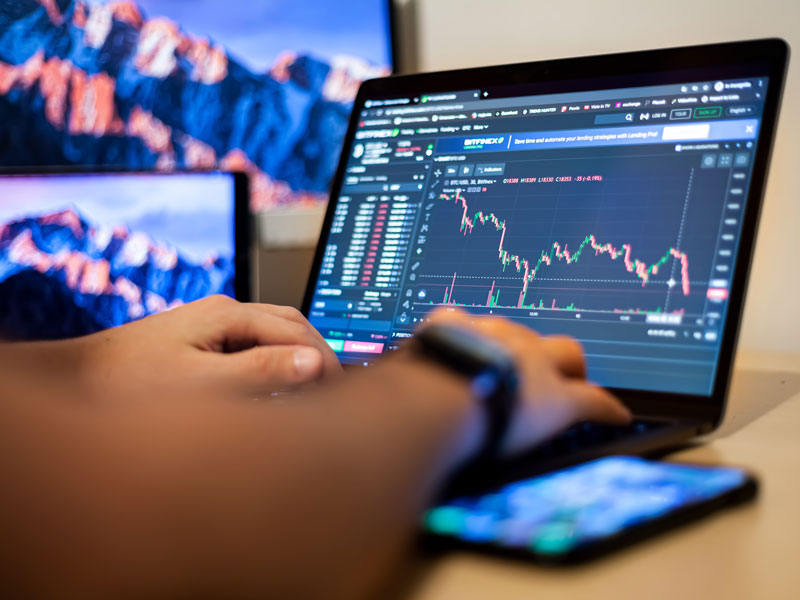
In the world of Forex trading, choosing the right indicators is crucial to building a successful trading strategy. A solid understanding of how these indicators work can be the difference between making profits or incurring losses. Whether you’re a novice trader or seasoned professional, utilizing effective trading indicators can improve your decision-making process. In this article, we will explore some of the best indicators for Forex trading, which can help you analyze market conditions and refine your trading approach. Additionally, if you are looking for a reliable best indicators for forex trading Trading Platform VN, we will include some tips on how to choose the right one.
1. Moving Averages
Moving averages are one of the most commonly used indicators in Forex trading. They help smooth out price data by creating a constantly updated average price. The two most popular types of moving averages are the Simple Moving Average (SMA) and the Exponential Moving Average (EMA). SMAs give equal weight to all prices in the calculation period, while EMAs give more weight to the newest prices, making them more responsive to recent price changes. Traders often use moving averages to identify trends and reversals. A common strategy is to look for crossovers, such as when a short-term moving average crosses above a long-term moving average, which could indicate a potential buying opportunity.
2. Relative Strength Index (RSI)
The Relative Strength Index is a momentum oscillator that measures the speed and change of price movements. The RSI ranges from 0 to 100 and is typically used to identify overbought or oversold conditions. A reading above 70 indicates that a currency pair may be overbought, while a reading below 30 suggests it may be oversold. Traders utilize the RSI to anticipate potential price reversals and to confirm trends. For instance, if a trader notices that the RSI falls below 30 (an oversold condition) while the price is in a downtrend, they may consider entering a buy position at a potential reversal point.
3. Bollinger Bands
Bollinger Bands consist of three lines: the middle line is a moving average, while the upper and lower bands are set two standard deviations away from this average. These bands expand and contract based on market volatility. When the bands tighten, it indicates lower volatility and a potential breakout in either direction. Conversely, when the bands widen, it suggests higher volatility. Traders often use Bollinger Bands to identify potential buy and sell signals. A common tactic is to buy when the price touches the lower band and sell when it reaches the upper band, especially in trending markets.
4. MACD (Moving Average Convergence Divergence)
MACD is a trend-following momentum indicator that shows the relationship between two moving averages of a security’s price. The MACD is derived from the difference between the 26-period and 12-period EMAs. It consists of the MACD line, the signal line (typically a 9-period EMA of the MACD line), and the histogram, which represents the difference between the MACD line and the signal line. Traders use the MACD for spotting potential buy and sell signals based on crossovers, divergence from price action, and the positioning of the MACD relative to zero. For example, when the MACD crosses above the signal line, it may indicate a buying opportunity.

5. Stochastic Oscillator
The Stochastic Oscillator is another momentum indicator that compares a particular closing price of a currency pair to a range of its prices over a specific period. This oscillator ranges from 0 to 100 and is typically used to identify overbought and oversold conditions in the market. A reading above 80 signals that the market may be overbought, while a reading below 20 indicates it may be oversold. Traders often look for divergences between the Stochastic Oscillator and price movements to predict potential reversals.
6. Fibonacci Retracement Levels
Fibonacci retracement levels are key indicators that help traders predict potential reversal levels in the market. Based on the Fibonacci sequence, key retracement levels typically occur at 23.6%, 38.2%, 50%, 61.8%, and 100%. Traders apply these levels horizontally on a price chart after a significant price movement, allowing them to identify potential areas of support and resistance. When the price approaches these Fibonacci levels, it can provide valuable insight into where traders might enter or exit positions.
7. Average True Range (ATR)
The Average True Range is a volatility indicator that measures market volatility by calculating the average range of price movements over a set period. The ATR does not indicate the direction of price movement, only the volatility level. Traders often use the ATR to set stop-loss orders and to determine position sizing. A higher ATR indicates higher volatility, which may require wider stop-loss levels and larger position sizes. Conversely, a lower ATR suggests lower volatility, allowing for tighter stops and smaller position sizes.
8. Volume Indicator
Volume is a critical indicator in any trading strategy as it represents the number of shares or contracts that change hands during a given period. In Forex trading, while volume is not always displayed due to the decentralized nature of the market, it can still be measured through ticks or on certain trading platforms. Analyzing volume helps traders confirm trends or reversals; rising prices accompanied by increasing volume strengthen the validity of the trend. Conversely, rising prices with declining volume may indicate a potential reversal.
Conclusion
Selecting the right indicators is a crucial step in developing an effective Forex trading strategy. Each of the indicators discussed offers unique insights into market conditions, and when combined, they can provide a comprehensive picture of potential trading opportunities. However, it is essential to understand that no single indicator is foolproof. The best approach is to combine various indicators, complementing them with proper risk management and trading psychology for the best results. Additionally, exploring different trading platforms, such as Trading Platform VN, can enhance your trading experience and provide the tools necessary for successful trading. Remember to backtest your strategies and practice before committing real capital to the market. With careful analysis and disciplined trading, you can leverage these indicators to achieve your Forex trading goals.

Sorry, the comment form is closed at this time.